Microwave experiments – chocolate sauce

After rearranging the freezer to fit stuff in properly, I (re)discovered a tub of Aldi Strawberry flavour frozen yoghurt. This stuff is actually really nice, more fake strawberry sweets flavour than Wexford’s finest, but that suits me down to the ground. On its own it can be a little dull, and I’m all out of chocolate or otherwise sauces, so I decided to have a bash off making a quick chocolate sauce.

Many of the nice chocolatey sauces I’d come across before contained golden syrup to make them sticky, so I figured I’d bung some of that in (well, honey, as there was a squeezy bottle to hand, and the tin of golden syrup is a bit of a pain). I also threw in some butter, to give that nice buttery flavour and also to stop the chocolate being so firm (just in case the syrup didn’t do it’s thing). The chocolate came from Lidl and was very nice. “Bellarom creamy milk chocolate” is what the packet tells me.

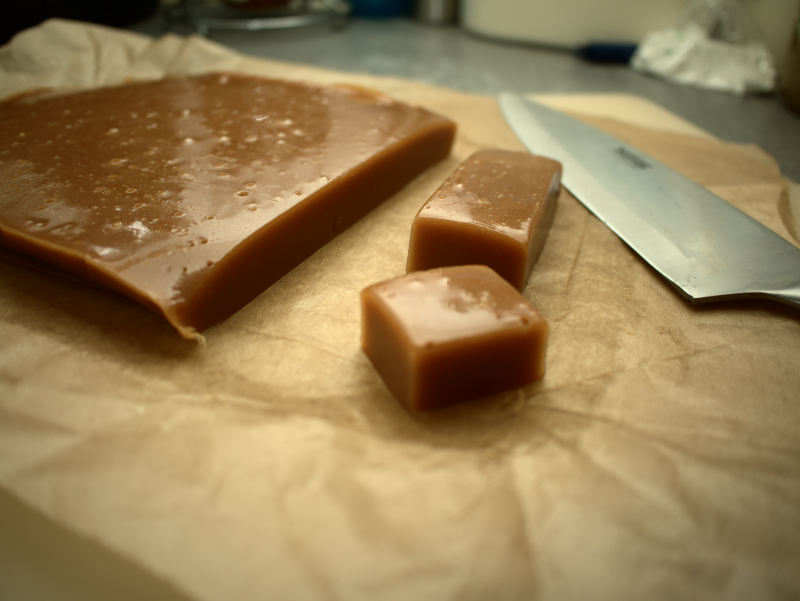
After microwaving, the chocolate still looked solid, but the liquidy ingredients were well hot, so after years of making ganaches, I just gave it a few second to stand and then stirred it till the chocolate was smoothly distributed. At first the sauce on the frozen yoghurt (I keep calling it icecream tbh) was nice and saucey, but when it got chilled by the icecream it turned into a lovely soft-chewy toffee. So there was both failure and success in the same chewy bite. Will certainly refine this micro-sauce method in future.

Chocolate sauce on frozen yoghurt

Chocolate sauce on Aldi's finest fake strawberry flavour frozen yoghurt (it's actually well tasty if you like that sort of thing)

Into a microwavable mug add:

  • 40g milk chocolate (the total bar weight, divided into the relevant number of chunks, practising arithmetic is good for you)
  • 2 tsp honey or golden syrup (squeezy bottles of these are great)
  • 1 heaped tsp of butter (ie a chunk that fits on a teaspoon and some bit above)

Microwave on full power for 20 seconds (I have no idea what wattage my microwave oven is, and I have no intention of pulling it out to read the sticker on the back (why they can’t write these things on the front is beyond me)). Be careful, the honey/syrup will have gotten pretty hot at this stage. Stir until all the chocolate is melted and pour quickly over icecream. If you eat it immediately the first bits of sauce are still runny, if you take loads of photos until you get a non-blurry one, it’ll be a bit toffee/chewy, but still nice (guess what happened to me…). Makes enough for one bowl of icecream for greedy people, two if you can share and aren’t fond of loads of sauce.

Posted in Delicious | Tagged , , , , , | Leave a comment

Lemon shortbread (for dipping in lemon curd)

Obsession with lemons you say? Who? Me? Surely not….

Intending to make lemon cake during the week, I bought a net of six unwaxed lemons in the supermarket. Sadly, I didn’t get around to it in time for my final day in my most recent lab rotation. So there were six lemons staring up at me for the past few days. Now, much and all as I love lemons, using all six at a go was going to be quite the feat, so I’ve done an experiment in lemon preservation (details to come shortly) and also made some curd. The curd used up two lemons. I used the zest of these two lemons to make the shortbread that follows (I decided I dont much like the bits of zest in curd, as my zester makes them too big).

Normally, Darina is my go to girl for kitchen help, but this time I followed Prue’s directions for shortbread, save that I substituted the rice flour for cornflour as I had that to hand. Rice flour and cornflour have no gluten in them, so when mixed with the wheat flour serve to reduce the overall gluten content of the biscuit to make it much lighter. Generally about a quarter of the flours is gluten free and the rest is wheat flour. Reducing the gluten content too much can result in a biscuit that disintegrates.

Lemon shortbread dough

Lemon shortbread waiting to go into the fridge. Admire my quality fork-pricking of the dough...

  • 110g Butter
  • 55g Caster sugar
  • Grated zest of two lemons
  • 40g cornflour
  • 125g plain flour

I used my Aldi chopper to speed things up, if you have a proper food processor, use that, if not bring your mixing arm to the gym…

Beat the butter to soften it. Cream in the caster sugar and then mix in the zest. Sieve the cornflour and flour together and add to the creamed sugar/butter mix (I dont tend to sift flours when using the chopper, it’s fiddly and I’m lazy…) Blitz until it just about comes together then turn out and give it one last mix. If you’be been doing it by hand, it’ll come together into a nice smooth paste round then.

Roll the shortbread dough out to about 1cm thick on some greaseproof paper (if you try to do it on the worktop, it’ll just smush into place and stick, even if you flour it). Cut into your desired shape (I went with fingers, for good dipping times). Lay on greaseproof paper on the baking tray. Prick with a fork all over, and right through to the tray. Put the biscuits in the fridge to chill until firm. Pre-heat your oven about now to 170°C (I used 160°C as we have a fan oven, damn, I miss conventional ovens).

When the shortbread has firmed up, sprinkle on some caster sugar, for that authentic shortbread look. Pop into the oven for about 20 minutes, until the shortbread has turned a pale golden colour. Prue recommends scooshing under the shortbread with a palette knife (who owns a palette knife like) after they come out of the oven, leaving to cool for 5mins and then transfering to a wire rack, but I just slid the baking paper off the tray on to the wire rack. Be careful though, hot shortbread is fragile, so if they overhang the rack, they’ll break or if you try to move them without COMPLETELY supporting the underside, they’ll break. When they’ve cooled they’re much more robust.

Serve with lashings of lemon curd and some coffee!

Posted in Delicious | Tagged , , , , , , , | Leave a comment

Chocolate biscuit cake experimentation

I’ve had half a pack of digestives staring at me for the last week and a bit. Shocking stuff I know, but as a caffeine half-intolerant (none after lunch) coffee drinker and someone who doesnt like tea, I don’t have much opportunity for chowing on digestives in the evenings. The other half of the packet was sacrificed to the noble cause of being a cheesecake base (I’ll write it up soon, honest). I’ve never made chocolate biscuit cake before and got the idea into my head earlier that that’s how I’ll use up the biscuits.

A Slice of Chocolate Biscuit Cake

A squidgy slice of chocolate biscuit cake, and a butterknife covered in squidge

I couldn’t find a recipe in one of my books, so armed with duckduckgo I did a quick search. The one I settled for is roughly based on the odlums recipe, except for a few changes due to what I had to hand. I can vouch for maltesers being great in biscuit cake, but I dont usually have them lying around the house.

  • 200g chocolate digestives (broken up, not pulverised)
  • 140g butter
  • 80g golden syrup
  • 125g dark chocolate
  • 1 dessertspoon cocoa powder

Put the butter, chocolate, and syrup in a pyrex jug and microwave on full for 40 seconds. Stir, and put it in for another 40 seconds. Stir and decide if it’s no longer lumpy or not, if needed give another short nuke/stir cycle. If the mix is smooth, mix in the cocoa powder and then throw in the biscuits. Smush into a lined springform tin or cake tin and chill in the fridge (honestly, the lining is essential, I poured straight into my springform tin with a nubbly-cheesecake-holding base, whoops).

After chilling for two hours, I took the squidgy slice shown above, despite being imperfect it’s still lovely with a big glass of milk. I reckon it’ll set better by the morning (I’ll let you know if it doesn’t). Changes to be made in the future: increase biscuity content (quantity AND type, eg. rich tea), add malteasers, line the base of the tin, learn to wait for it to chill overnight.

Posted in Cake, Delicious | Tagged , , , , , , , | 1 Comment

Lemony delight (where “y delight” = bars)

For Easter my lovely fella’s lovely mammy invited me over for dinner, so I had to bring something tasty. I’ve been meaning to make something lemony for a while, and so lemon bars were made. Unfortunately, they’re awful tasty, so I had a couple for breakfast, leaving not quite enough to go round after dinner….

The base is a sort of lightly crispish base, like that of the caramel slices, and the topping is a lovely sweet lemon curd. I’d imagine dropping some of the sugar or increasing the amount of lemon juice should increase the tang, or making icing using the juice of another lemon should get a proper wince going.

Lemon Slices

A tray of lemon bars after some had been taken away for *cough* ehhh, testing....

  • 175g plain flour
  • 125g butter
  • 50g granulated sugar (though I used caster and it was grand)
  • 200g caster sugar
  • 2 tbsp flour (I used self raising even though recipe called for plain)
  • 1/2 tsp baking powder
  • 1/4 tsp salt
  • 2 medium eggs
  • Juice and grated rind of one lemon
  • Whatever you’d like to top it with (icing sugar/icing/fresh air)

Preheat your oven to 170°C. Grease and line a 20cm cake tin (mine was 18cm, first time I’ve ever bothered to measure).

If you have a food processor/chopper, you can use it here or you can do it by hand. Rub the butter into the 175g of flour until it’s like breadcrumbs, and then mix in the sugar (the 50g lot). Pour the crumbs into the tin and press down firmly. Bake for 20 minutes in the preheated oven.

While that’s cooking, prepare the curdy topping. Into your food processor/chopper/big bowl, add the sugar, flour, baking power and salt. I like to leave the wet ingredients until the base is nearly ready to come out of the oven. So you can use this time to get the rind off the lemon (this is a damned fiddly job, and I keep meaning to upgrade my zester). When the zest is off (add it to the dry mix above), roll the lemon firmly on the counter, and then juice over a sieve into a bowl (apparently rolling is supposed to get extra juice out by breaking up the insides a bit, either way rolling gets extra lemon smell onto your hands). Beat the eggs and add to the mix along with the lemon juice and whizz/beat well.

When the 20 mins for the base are up, it should be a nice light golden colour. Pour on the curdy mix and put back into the oven for another 20mins. The recipe reckons the middle of the cake should have a slight wobble and then it’s done, but I overcooked mine (25mins instead of 20) so no wobble (still tasted good though).

Leave to cool in the tin. You can dredge with icing sugar, or put a nice lemon icing on top, or you can do nothing like I did (I was running late, I’d probably have tried harder if I got up earlier). Slice into bars and serve with a bucket of coffee. The recipe claims 24 bars, but I think about fifteen good size bars is more like it.

Posted in Cake, Delicious | Tagged , , , , , , , | 1 Comment

Science Hack Day and crocheted blood cells

At the beginning of the month (March 3rd and 4th to be precise), I had the pleasure of attending ScienceHackDay Dublin, which was a great big hackathon in the name of Science! A hackthon is basically a long session hacking away at your projects or your friends’ projects, think staying up stupid late to get a paper in for a deadline, except more fun and the project is of your own choosing.

The venue before the day starts

Just before science hackday starts, the network team are ready in their nest..... (Schro and VadimCK run a good network)

The event was very well organised, with food provided (including apple lattices for all!), and plenty of space to work. All internetworking sorts of things were well sorted too. After a few introductory project talks in the morning, people assembled off into groups to work on a variety of projects from programming to building hardware to visualise aurora. But wait, Tríona doesn’t do programming or building hardware, so what did she do for the 36 hour event?

A collection of crocheted cells and an antibody

Spot the phagocytosing granulocyte...

I did what I do best, and that’s Science (and crochet). So from about midday on the Saturday (I had chatting/networking to do before that) until 1am and from 10am on the Sunday till lunch, I crocheted various cells. I devised my own patterns for them, and tried very hard to document them, so I have one for the red cell and the lymphocyte, and I have half patterns for the antibody and neuron. I started the neutrophil pattern with good intentions, but X died when I went off to find jelly babies so I lost the (unsaved half-finished) pattern.

The red cell is the first pattern I did that day, and documented as I went along. I’ll put some more patterns up in the near future.

Red blood cell
dc = double crochet (that’s UK dc, a US sc)
dc2tog = double crochet 2 together, it’s a way of decreasing stitches (sc2tog for USians)
A magic circle is basically a loop you work into that can be tightened very tight to form a circle. Put two fingers together and wrap the yarn around them twice, then pick up a chain stitch as if these loops were your base stitch and work the rest of the row into the loops. When you get to the end of the first row, slipstitch to the first stitch and pull gently on the loops to work them tighter and tighter until you have no more hole, and that’s a magic disappearing circle!
Start each round with a single chain, this doesnt count as a stitch. Finish each round by slipstitching to the first dc of the round.
When you get to the end, leave at least a 30cm tail to bind off. I find I often have big gaps that a bit of darning can cover up. You’ll also have to put a stitch or two through the centre of the cell to pin the faces together in the characteristic biconcave shape.

  1. 12 dc into a magic circle
  2. 2 dc into each dc
  3. *2dc into next dc, 2dc into next dc, 1 dc into next dc* repeated to end of round
  4. *1dc, 1dc, 1dc, 1dc, into next four dc, 2dc into next dc* repeated to end of round
  5. dc into each dc to end of round
  6. Repeat round 4
  7. *1dc, 1dc, 1dc, 1dc, into next four dc, dc2tog in next two dc* repeated to end of round
  8. Repeat round 5
  9. Repeat round 5
  10. *dc2tog in next two dc, dc2tog in next two dc, one dc in next dc* repeated to end of round
  11. At this point stuff the cell, remember, red cells have this biconcave disc shape, where the edges are thick and the middle is thin.
  12. dc2tog until no stitches left
Posted in Craft, Science | Tagged , , , | Leave a comment

Caramel Slices (or, Diabetes in a Mouthful)

One of my favourite things to have with a cup of coffee is a humble caramel slice. They also make excellent treats to bring in to work (if you try to eat the whole tray at home on your own, I am not responsible for hospital bills). So, when I finished my second PhD rotation, I brought in caramel slices, to make doubly certain everyone would miss me….

Lunchboxes of Doom (and caramel slices)

That's a lot of caramelly goodness

Beware that the caramel is a) pretty intimidating to calorie counters, and b) somewhat tedious to make, but it totally pays off.

First you make the base. This base is nice and crumbly, but you can do a different type of biscuit if you prefer. I’ve been using this base since I first got the recipe for the slices more than fifteen years ago from my neighbour (hi stella! thanks!).

Biscuity base

  • 8oz plain flour
  • 4oz butter
  • 2oz caster sugar

Preheat the oven to 220ºC. Prepare a baking sheet by putting some greaseproof paper on top. Rub the flour and butter together until it has the appearance of breadcrumbs, then stir in the sugar. Tip the crumbs onto the papered tray, and push around a bit until it’s level, but dont press it hard. Bake until golden around the edges (takes about 20 minutes). Leave aside to await its caramelly topping.

Biscuity base

Biscuity base (this also doubles up as a crumble topping, just bake on top of fruit instead of on a tray).

The good stuff (caramel)

  • Can of Evaporated milk (400g I think, also note EVAPORATED, not the other sort)
  • 8oz of butter
  • 4 tablespoons golden syrup
  • Vanilla essence

For the caramel, combine all ingredients apart from the vanilla in a pot. Bring to the boil, stirring constantly. When everything has melted together, bring the caramel to a simmer, and stir constantly, for about forty to fifty minutes, until the caramel coats the back of a spoon. You’ll see it start to thicken and look more like caramel. Also, I’m serious about the stirring, CONSTANT STIRRING. Either farm off some of the stirring time to a younger sibling, or bring a book to hold in your other hand…

Caramel on the back of a spoon

The caramel should coat the spoon nice and thickly when you dip it in the pot.

Pour the thick caramel on to the base and let to cool. Get a big glass of milk to drink while you scrape out whatever is left stuck to the pot (sometimes I leave a bit in the pot instead of pouring it all out, and make myself sick trying to eat ALL THE CARAMELS). When the caramel is cool, you can pour melted chocolate on top. I’m going to assume (never assume etc…) that you can melt chocolate, if not ask someone (me or another adult).

Once the chocolate is set, you can cut it into slices, pop it in a lunchbox, and make yourself a workplace hero!

Posted in Cake, Delicious | Tagged , , , , , , , , , | Leave a comment

Dinosaur Cheese Bread

Dinosaur cheese bread

Dinosaur cheese bread

No no, there’s no dinosaur cheese in this bread, sure dinosaurs weren’t mammals so they didn’t make milk! The blobs of gouda on top make me think of dinosaurs (what a dull explanation).

  • 200ml Milk
  • 200ml hot water (not boiling)
  • 5g salt
  • 7g packet active yeast (them sachets you find in the supermarkets, you’ll have to increase the amount if you’re fancy enough to use fresh yeast)
  • 300g strong white flour
  • 300g plain white flour
  • 50g butter (softish)
  • sliced up block of gouda (or other nice cheese, gouda was what we had in the fridge)

Put the flours, yeast and salt into a bowl and mix through. Then pour on the milk and then the hot water (the combination of hot water and cold milk should be a pleasant warm temperature that the yeast will like). Squidge around in the bowl until it all starts to come together, you can then turn it out to knead it or you can just squidge around longer in the bowl (i dont like messing up the countertop until I need to). The dough should be slightly sticky, not totally wet, but definitely not dry. Pop the dough back in the bowl and cover with a lid or a plate or some cling film. Leave on the counter for two hours until all puffy and risen.

Flour your worksurface and turn the dough out on to it. Knead about for a bit (if noone’s ever shown you how to knead dough, fear not, it’s quite easy. Use your left hand to rotate the dough 90degrees, then use the knuckles of your right hand to pick up the dough from underneath and fold it on to it self, rinse and repeat (dont actually rinse the dough, it’s just a saying)). When you’re happy with the ball of dough (you’ll have beaten a lot of the air out of it by now), roll it out into roughly a rectangle about 2 or 3 centimetres thick. Spread (smear) the softened butter about the dough, spread the slices of cheese over two thirds of the area of the rectangle, and roll up along the longest side of the dough. Think of it as a swissroll with cheese instead of icing…. I had some spare cheese that I didn’t expect to fit, so I gave one slice to the handsome man, and the other piece got broken up and dotted on top of the roll.

When you’ve got the bread all rolled up, preheat the oven to about 220ºC. The dough will do some nice rising during this time. When the oven is hot, pop in the bread. After 20 mins turn it down to 180ºC for the last 20minutes of baking. If you think it’s not done, leave it in longer! A crusty crust is better than a doughy middle! Once it’s finished, leave it to cool before slicing. Slicing hot bread usually just makes a squishy mess :( and then share pictures of your masterpiece with twitter!

Posted in Delicious | Tagged , , , , , , | Leave a comment

Kettle corn

The end of a bowl of kettle corn

What remained of the bowl of kettle corn when I remembered to photo it.

With the sorrowful arrival of the kettle corn recipe, comes the shopping for clothes two sizes bigger. The stuff is unnessecarily tasty, and as I discovered this evening, terribly easy to make. So far it doesn’t seem to have ruined the pot either (my other excuse for not making it till now), though I will keep you posted if I find out otherwise tomorrow.

Super thanks go to Becky for the recipe!

  • 1/2 cup corn
  • 1/6 cup light brown muscavado (Becky suggested caster sugar, but I’m all out)
  • Oil for the pan
  • Salt

You can already see how terrifyingly simple the recipe is.

Get your popcorn serving bowl ready first, and fish out your biggest saucepan with matching lid.

Pour in oil to put a thin layer on the bottom of your pot and throw in three “Sacrificial Grains”. Put your pot on a fairly high heat (on an electric that goes to 6, i’d go with five or six. Sadly I still havent sussed out the gas hob fully, so if the oil starts to smoke, it’s too hot, beyond that, it’s a bit of a matter of experience). Mix the sugar and corn in their cup.

When the Sacrificial Grains have popped, then dump in your sugar/corn mix. Shake the pot regularly to let everything heat evenly, and enjoy the popping! If you don’t have very big pots, you’ll have to learn the skill of dumping out half the popcorn and returning the rest to the heat (without messing the kitchen, that’s the skill part). If you do have a very big pot, when the popping slows, dump the contents into the serving bowl (see why I said to have it ready). I put water into my pot before eating (as did Becky, and I am informed her kitchen elf cleaned the pot wonderfully and with little hassle).

Sprinkle liberally with salt (as much salt as if it wasn’t sugar popcorn, honestly, this stuff is best sweet and salty) and try not to eat it all at once….

(And yes, that’s On Food and Cooking in the background of the photo, honestly it’s just coincidence that it was behind the bowl, it’s been on my coffee table for weeks while dip in and out of it (did I mention that I love this book?))

Posted in Delicious | Tagged , , , , , , | 1 Comment

Spud cakes (or at least their crust)

Two crispy spud cakes beside a lovely soft fried egg

Crispy potato cakes

So my not so well behaved dinner this evening contained potato cakes (and a beautifully fried egg). Potato cake are very very easy to make, the hard part is ensuring you dont eat the mash before you cake them. For tonights dinner, I used leftover cheese and onion mash (I specifically made a double batch for that dinner), but if you like to mash other things in (I can highly recommend ham) then go for it!

I shall assume you can cook mashed potato. If you can’t ask your mammy, or if you can’t (for reasons of distance or pride), the dailyspud should be your go to woman for all things spuddy (her mash recipe is here, though she has a few others if you look in Recipes).

  • 2 people’s worth of leftover mash (not the mass of a person, just the amount they’d like to eat)(and the mash can be plain or fancy)
  • 50g Plain flour
  • 50g Polenta
  • 1 tsp smoked paprika
  • As much black pepper as you care to grind
  • A saucer full of milk
  • Oil to fry the cakes

I find chilling the mash makes it a lot easier to work with when making potato cakes. If yesterday’s leftovers, just store in the fridge over night, otherwise try to give at least two hours in a fridge, the mash should be room temperature at most. You can shape prior to chilling, or just stuff the mash into a lunch box, so you can take slices off a log of mash instead. Make sure the shapes arent too big or they’ll break up in the pan when you try to turn them.

Mix the flour, polenta, and spices on a plate. Heat a pan with oil in it, so that it sizzles if you flick some water at it (don’t pour on water, just dip your finger in water and flick whatever sticks). Take your cakes (either prepared shapes or slices from a log of mash) and dip in the saucer of milk (both sides). Then dip the cake in the flour mix (both sides) and put in the hot pan. Prepare a number of cakes like this, then start turning the cakes in the order they were put on the pan (they should be golden brown underneath). Cook until both sides are nice and crispy. Drain on kitchenpaper and serve to hungry people with some lovely mayo or other such appropriate sauce.

You can use this crispy coating on other things that deserve a crunchy outside. I plan on trying it on chicken next time I have some, I shall report back!

Posted in Delicious | Tagged , , , , , , , | Leave a comment

Lemon curd buns

Inspired by a very tasty lemon curd muffin I got in the Kinsealy garden centre last week, I decided to make lemon buns and curd to go on top of them.

For the buns I used the recipe for lemon drizzle cake and spooned it into 15 bun cases and baked for about 20 minutes until set.

Happilly my net of lemons contained three, so after adding one the cake mix, I had two to make the curd. I had never made curd before, so I ended up scaling down Nigel Slater’s recipe and reducing the sugar for extra wince-inducing tang.

  • Juice and zest of two lemons
  • 90g sugar (even with 100g it will still be tangy)
  • 50g butter
  • One egg and one egg yolk

Set up a pot of simmering water with a bowl set over it so the bottom doesnt touch the liquid. (Lacking a proper sized bowl, I drop a tall cookie cutter into my smallest pot and balance my pyrex jug on top). Put the juice, zest, sugar and butter in to melt while you separate and beat the eggs. When the butter is fully melted, add the eggs, and stir with a whisk.
Stir regularly and cook the mix for about ten mins (according to Nigel, I ended up going closer to fifteen) until the mixture starts to thicken (like custard) and “coats the back of a spoon”. Then pour into a jar and leave to set, stirring occasionally.

Sadly mine was a little runnier than I’d have liked, but hopefully with enough time in the fridge, that won’t matter too much. The plan is then to smush it on to the buns and delight my lab colleagues tomorrow.

A glass ramekin of lemon curd

Deliciously face-scrunching lemon curd

Posted in Cake, Delicious | Tagged , , , , , , , , , | Leave a comment