Peanutbutter Brownies

A number of members of my collaborator’s group are leaving for pastures new, so I have made cake as a goodbye-you’re-really-gonna-miss-it-here gift.

raw brownies

The brownies prior to baking. The peanutbutter and chocolate chunks sink into the hot brownie batter during cooking, so this method allows even distribution of filling.

The recipe is my usual brownies recipe (also found in the cheesecakebrownies recipe) with the addition of blobs of peanutbutter instead of nuts. I did have nuts, but it was a bag of hazelnuts, and would have needed roasting and skinning, but peanut butter is delicious with chocolate, so this “laziness” worked out well too.

  • 225g butter
  • 375g caster sugar
  • 3 eggs (orignal recipe called for 4 medium, but we buy ex large normally)
  • 75g cocoa powder
  • 100g self raising flour
  • 100g bar of chocolate (or “chocolate”, as I often use scotbar)
  • Peanutbutter (about 3 tablespoons, have more than enough anyway, there should always be peanutbutter in a kitchen)

Grease and/or line a cake tin (I used my 17cm tin and a small dish, the small dish is for have a small set of home brownies when the big tin is brought to work). Pre-heat the oven to 180°C (170° for fan ovens).

Melt the butter and add the sugar. Beat in the eggs one by one. Sift the cocoa and flour together, and add to the mix in three parts.

Divide between cake tin(s). Break up the chocolate bar and plop pieces around on the brownie. Get a teaspoon and a knife and plop 0.5tsp sized dollops about the surface. The chocolate and the peanutbutter will sink during cooking anyway. Put into the oven for 40 mins.

Cooked brownies

See? Allllllll sunk into the brownies. The greaseproof paper means the sunk/melted chocolate chunks wont glue the cake to the tin (trust me, voice of experience, chocolate glue is hard to get off tins without heating).

Let the brownies cool in their tin, then turn them out and cut them up. Alternatively, don’t wait for them to cool and attack them with a spoon… just mind yourself, they’re pretty hot.

spoon on a brownie

Too impatient to wait for them to cool…

Cheesecake brownies (bonus three recipes in one)

I’ve been meaning to make cheesecake brownies for a few years. I’ve a great recipe for brownies from Chocolate Cookery (you’ll have to look this one up on abebooks) and an equally great recipe for white chocolate cheesecake. Others have combined these before with much success, so it was my turn to have a go off them.

Slices of cheesecake brownies waiting to be brought to college

Continue reading

My first coffee and walnut cake

I’ve been meaning to get around to making coffee and walnut cake for years, and what better excuse to make a big decorated cake than a party! So, today, I made one, finally! Taking inspiration from Darina (did I mention how much I love the Ballymalloe Cookery Course book?), I added walnuts to the basic coffee cake recipe and doubled the buttercream quantity so there’d be some to go on the top.

A beautiful coffee and walnut cake.

The cake speaks for itself. In the background: a lemon (we know I love lemon), an aeropress (for making coffee in college), and my favourite coffee tin (it has the sleaziest coffee bean on the back, I must show you some time).

In the unlikely event that you don’t like walnuts, you can leave them out. In the more probable event that you do, buy more than you need for the recipe, I find other halves are inclined to start gobbling the nuts before you realise.

The original recipe called for irel, which is a coffee essence sort of product. I think it’s a sort of chicory/coffee syrup that you can use for cooking or making hot drinks with. Instead I used some strong coffee and misused my mokka pot to make it. I half filled the water resevoir and filled the coffee part as normal, giving a shorter stronger coffee (this is not how you’re normally supposed to use them). I poured the coffee over ice into a jug when it was done and put it in the fridge to cool completely. I had some leftover coffee after the cake, so I stirred in some milk for a lovely iced coffee treat. (I love coffee, in case you didn’t know this :) ).

  • 225g butter
  • 225g caster sugar
  • 4 eggs
  • 225g self-raising flour
  • 6 dessert spoons strong coffee (you could probably substitute in instant or irel if you prefer)
  • 100g of walnut halves (keep the 8 best looking halves for the top of the cake, and roughly chop/crush the remainder)

Preheat the oven to 180°C. Grease and line two 20cm cake tins (a bit of butter under the baking paper helps to keep it in place.

Cream together the butter and sugar until fluffy. Then beat in the eggs one by one, beat them thoroughly, the first one is the hardest. Add the (sifted) flour and mix well. Add the coffee and walnut pieces and then divide the mixture between the two tins. Bake for 30 minutes until the cakes are firm and the sides start to come away from the edges of the tin.

Turn out on to a wire and remove the baking paper and then you can flip them over if you don’t want to have lines on the cake. Wait until they’re cool before you begin to ice them.

  • 125g butter
  • 250g icing sugar
  • 4 tsp instant coffee in 1 tsp of hot water (I know, the shame of having a jar of instant, had to buy my first jar in years just to make the cake, ruining my coffee snob credentials)

There are two ways to make the icing, the easy way and the hard way. The hard way is to cream everything together by hand (I tried this at first). The easy way is to bung everything into a food processor, or in my case, a chopper and blitz till it’s smooth. When it’s all creamed together by either method, place the bottom piece of cake on the plate you’ll be showing the cake off on, then spread half the icing on. Place the top part on top and put the remainder of the icing on top. Decorate with the remaining walnut halves. If you want enough to cover the sides, increase the quantity of icing by at least half (I always make a mess of the sides of cake so extra icing is handy for patching holes).

NOM WITH A BIG MUG OF COFFEE AND SOME FRIENDS! (after everyone’s admired your icing skills of course).

Lemony delight (where “y delight” = bars)

For Easter my lovely fella’s lovely mammy invited me over for dinner, so I had to bring something tasty. I’ve been meaning to make something lemony for a while, and so lemon bars were made. Unfortunately, they’re awful tasty, so I had a couple for breakfast, leaving not quite enough to go round after dinner….

The base is a sort of lightly crispish base, like that of the caramel slices, and the topping is a lovely sweet lemon curd. I’d imagine dropping some of the sugar or increasing the amount of lemon juice should increase the tang, or making icing using the juice of another lemon should get a proper wince going.

Lemon Slices

A tray of lemon bars after some had been taken away for *cough* ehhh, testing....

  • 175g plain flour
  • 125g butter
  • 50g granulated sugar (though I used caster and it was grand)
  • 200g caster sugar
  • 2 tbsp flour (I used self raising even though recipe called for plain)
  • 1/2 tsp baking powder
  • 1/4 tsp salt
  • 2 medium eggs
  • Juice and grated rind of one lemon
  • Whatever you’d like to top it with (icing sugar/icing/fresh air)

Preheat your oven to 170°C. Grease and line a 20cm cake tin (mine was 18cm, first time I’ve ever bothered to measure).

If you have a food processor/chopper, you can use it here or you can do it by hand. Rub the butter into the 175g of flour until it’s like breadcrumbs, and then mix in the sugar (the 50g lot). Pour the crumbs into the tin and press down firmly. Bake for 20 minutes in the preheated oven.

While that’s cooking, prepare the curdy topping. Into your food processor/chopper/big bowl, add the sugar, flour, baking power and salt. I like to leave the wet ingredients until the base is nearly ready to come out of the oven. So you can use this time to get the rind off the lemon (this is a damned fiddly job, and I keep meaning to upgrade my zester). When the zest is off (add it to the dry mix above), roll the lemon firmly on the counter, and then juice over a sieve into a bowl (apparently rolling is supposed to get extra juice out by breaking up the insides a bit, either way rolling gets extra lemon smell onto your hands). Beat the eggs and add to the mix along with the lemon juice and whizz/beat well.

When the 20 mins for the base are up, it should be a nice light golden colour. Pour on the curdy mix and put back into the oven for another 20mins. The recipe reckons the middle of the cake should have a slight wobble and then it’s done, but I overcooked mine (25mins instead of 20) so no wobble (still tasted good though).

Leave to cool in the tin. You can dredge with icing sugar, or put a nice lemon icing on top, or you can do nothing like I did (I was running late, I’d probably have tried harder if I got up earlier). Slice into bars and serve with a bucket of coffee. The recipe claims 24 bars, but I think about fifteen good size bars is more like it.

Caramel Slices (or, Diabetes in a Mouthful)

One of my favourite things to have with a cup of coffee is a humble caramel slice. They also make excellent treats to bring in to work (if you try to eat the whole tray at home on your own, I am not responsible for hospital bills). So, when I finished my second PhD rotation, I brought in caramel slices, to make doubly certain everyone would miss me….

Lunchboxes of Doom (and caramel slices)

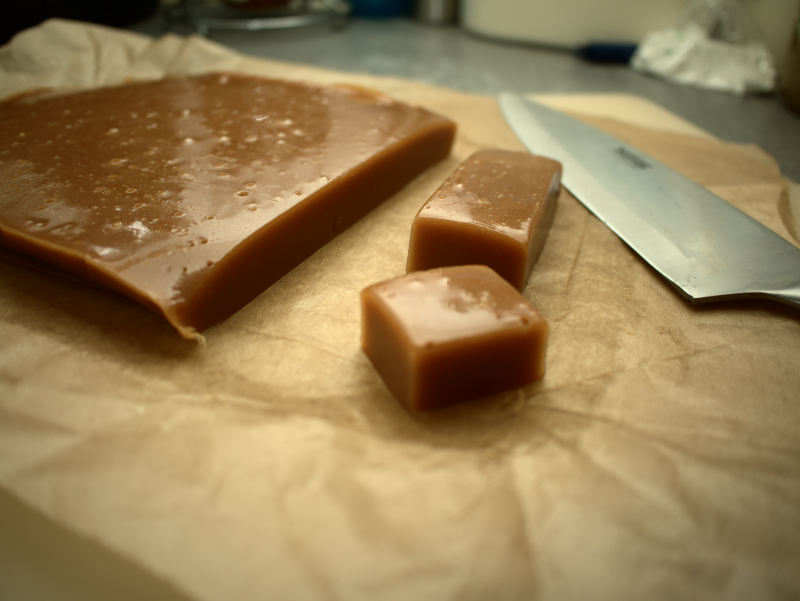
That's a lot of caramelly goodness

Beware that the caramel is a) pretty intimidating to calorie counters, and b) somewhat tedious to make, but it totally pays off.

First you make the base. This base is nice and crumbly, but you can do a different type of biscuit if you prefer. I’ve been using this base since I first got the recipe for the slices more than fifteen years ago from my neighbour (hi stella! thanks!).

Biscuity base

  • 8oz plain flour
  • 4oz butter
  • 2oz caster sugar

Preheat the oven to 220ºC. Prepare a baking sheet by putting some greaseproof paper on top. Rub the flour and butter together until it has the appearance of breadcrumbs, then stir in the sugar. Tip the crumbs onto the papered tray, and push around a bit until it’s level, but dont press it hard. Bake until golden around the edges (takes about 20 minutes). Leave aside to await its caramelly topping.

Biscuity base

Biscuity base (this also doubles up as a crumble topping, just bake on top of fruit instead of on a tray).

The good stuff (caramel)

  • Can of Evaporated milk (400g I think, also note EVAPORATED, not the other sort)
  • 8oz of butter
  • 4 tablespoons golden syrup
  • Vanilla essence

For the caramel, combine all ingredients apart from the vanilla in a pot. Bring to the boil, stirring constantly. When everything has melted together, bring the caramel to a simmer, and stir constantly, for about forty to fifty minutes, until the caramel coats the back of a spoon. You’ll see it start to thicken and look more like caramel. Also, I’m serious about the stirring, CONSTANT STIRRING. Either farm off some of the stirring time to a younger sibling, or bring a book to hold in your other hand…

Caramel on the back of a spoon

The caramel should coat the spoon nice and thickly when you dip it in the pot.

Pour the thick caramel on to the base and let to cool. Get a big glass of milk to drink while you scrape out whatever is left stuck to the pot (sometimes I leave a bit in the pot instead of pouring it all out, and make myself sick trying to eat ALL THE CARAMELS). When the caramel is cool, you can pour melted chocolate on top. I’m going to assume (never assume etc…) that you can melt chocolate, if not ask someone (me or another adult).

Once the chocolate is set, you can cut it into slices, pop it in a lunchbox, and make yourself a workplace hero!

Lemon curd buns

Inspired by a very tasty lemon curd muffin I got in the Kinsealy garden centre last week, I decided to make lemon buns and curd to go on top of them.

For the buns I used the recipe for lemon drizzle cake and spooned it into 15 bun cases and baked for about 20 minutes until set.

Happilly my net of lemons contained three, so after adding one the cake mix, I had two to make the curd. I had never made curd before, so I ended up scaling down Nigel Slater’s recipe and reducing the sugar for extra wince-inducing tang.

  • Juice and zest of two lemons
  • 90g sugar (even with 100g it will still be tangy)
  • 50g butter
  • One egg and one egg yolk

Set up a pot of simmering water with a bowl set over it so the bottom doesnt touch the liquid. (Lacking a proper sized bowl, I drop a tall cookie cutter into my smallest pot and balance my pyrex jug on top). Put the juice, zest, sugar and butter in to melt while you separate and beat the eggs. When the butter is fully melted, add the eggs, and stir with a whisk.
Stir regularly and cook the mix for about ten mins (according to Nigel, I ended up going closer to fifteen) until the mixture starts to thicken (like custard) and “coats the back of a spoon”. Then pour into a jar and leave to set, stirring occasionally.

Sadly mine was a little runnier than I’d have liked, but hopefully with enough time in the fridge, that won’t matter too much. The plan is then to smush it on to the buns and delight my lab colleagues tomorrow.

A glass ramekin of lemon curd

Deliciously face-scrunching lemon curd

Lemon Drizzle Cake

Lemon Drizzle Cake

Lemon Drizzle Cake

I have another lemon drizzle cake cooling in the kitchen right now.  Very very tasty and filled with the goodness of two lemons! (it’s not my fault if vitamin C is a delicate compound that doesnt like being heated…)

  • 125g/4oz butter
  • 175g/6oz caster sugar
  • 2 large eggs (beaten)
  • 175g self-raising flour (sifted)
  • 2 lemons
  • 20g of sugar for the syrup
  • Icing sugar to dust

Preheat your oven to 180ºC. Grease and line a cake tin (the book suggested 16cm, I used a 20cm circle and made a flatter cake).
Cream the butter and sugar together until smooth. Add the beaten egg, a little at a time, adding a tablespoon of flour after each addition. Then add the zest and juice of one lemon, mix well, and pour into your tin. Bake for about 25 to 30 minutes until golden and set. You can leave it to cool in the tin on a wire rack or turn it out, both work grand sure.

Zest the remaining lemon and keep aside. Add the juice of the remaining lemon and the 20g of sugar to a pan and heat gently (the original recipe suggested 25g, but 20g works out grand). When the sugar is dissolved, simmer for 4mins. Poke lots holes in the cake with a cocktail stick and pour over the syrup. When the cake is cooled, dust with icing sugar and sprinkle on the zest.

Nom nom nom!

Delicious Strawberries and Cream Cake – for eating in the staff room

Yesterday I brought a delicious Victoria sponge loaded with strawberries and cream to college. Needless to say it didn’t last long, us sciencey folks need cake to keep the research going…

I found the recipe in the Ballymalloe Cookery Course (big book by Darina Allen, great for the basics). Ideally you need an electric whisk for this recipe.

  • 3 eggs, separated
  • 225g caster sugar
  • 75ml water
  • 140g flour, sifted
  • 1tsp baking powder
  • Icing sugar for dusting
  • Tasty fillings of choice (for me it was jam, cream and strawberries)

Preheat the oven to 190ºC.
Line two 20cm baking tins (don’t grease them, try to get the paper to fit as well to the edge as you can, you can use a knife to separate the sides if your tin isnt nonsticky. When recipes don’t contain much fats, and use whisked egg whites, it’s best to avoid greasing the tin).
Whisk the egg whites until they form soft peaks. Set aside.
Whisk the egg yolks with the sugar for two minutes, until they turn pale.
Whisk in the water, whisk for ten minutes until it becomes light and airy.
Fold in the sifted flour and baking powder.
Fold in the eggwhites.
Divide between the tins, and pop into the oven for 20mins.
Turn out on to wire racks and think about filling the cakes.

First, I decided which end of the cake was the bottom and put it on the plate it was to travel on, then I whipped cream and set it aside. Spread jam on either side of the sandwich (to stop the juice soaking into the sponge and also, I like jam). Then quartered (and removed the green bit) of loads of strawberries and put them on the bottom of the cake, then lathered on the cream and put the top on. I dusted the cake when I arrived in the break room (the icing sugar sometimes sweats and looks less fancy after a few hours, so pop a sieve and the icing sugar in the bag with the cake, or you can get them nice icing sugar dredgers).

Sadly, there are no photos of this masterpiece, but there are a few researchers who can attest to it’s tastiness…